


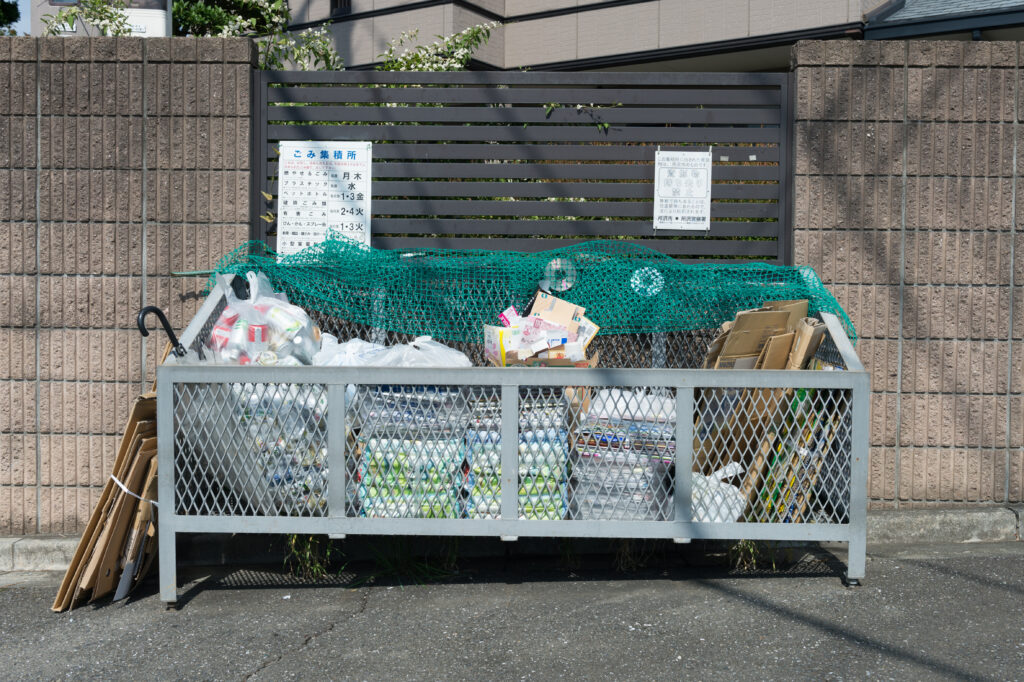
Understanding Trash Disposal Rules in Japan: A Simple Guide for Students
If you’re planning to study in Japan or have just arrived, you may notice that trash disposal rules are more detailed than in your home country. It can feel confusing at first—but once you understand the basics, it quickly becomes part of your daily routine.
Why Are Trash Rules So Detailed?
Japan places a strong emphasis on recycling and environmental responsibility. That’s why trash is carefully sorted—items that may look similar can actually require completely different disposal methods.
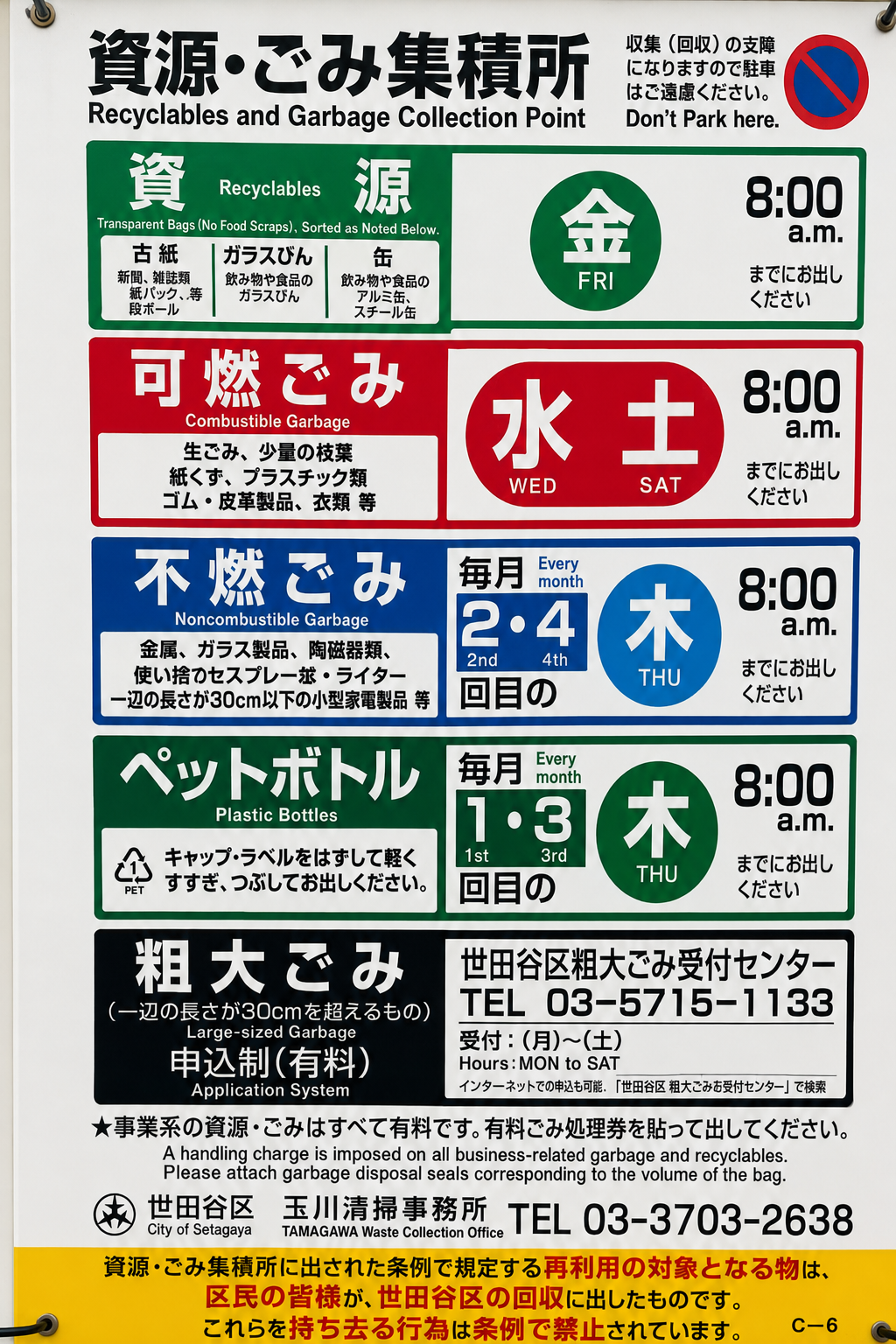
An example of garbage disposal rules posted at a neighborhood garbage collection point in Tokyo.
Basic Trash Categories (May Vary by Area)
Common categories may include the following, depending on your city or building.
- Burnable Trash (Combustible) 可燃ごみ(かねんごみ / Kanen gomi ):
Food waste, paper, and other everyday items
In some areas, certain plastics are included - Plastic Waste プラスチックごみ( Purasuchikku gomi) :
Plastic containers, packaging, and bags (Usually marked with the plastic recycling symbol) - Non-Burnable Trash 不燃ごみ(ふねんごみ / Funen gomi):
Metal, glass, ceramics, and small electronics
Larger items may require special disposal as bulky waste - Recyclables 資源ごみ(しげんごみ / Shigen gomi :
Cans, glass bottles, cardboard, newspapers, and other recyclable materials - PET Bottles ペットボトル(Petto botoru) :
Plastic drink bottles such as water, tea, and soda bottles
※In some areas, PET bottles and plastic waste are collected together) - Bulky Trash 粗大ごみ(そだいごみ / Sodai gomi) :
Furniture, futons, bicycles, large appliances. Usually requires a reservation and a paid disposal ticket from the local municipality. Fees are typically a few hundred to a few thousand yen per item.
Local Rules Matter
Trash disposal rules are not the same across Japan. For example, plastic may be:
- Collected as burnable trash
- Collected separately on designated days
- Recycled as a specific category
Because of this, it’s important not to rely only on general guidelines.
How to Check Your Local Rules
Make sure to confirm the rules in your area using:
- Your city’s trash separation guide
- The official city or ward website
- Notices in your apartment or dorm
- School staff or host family guidance
Key Rules to Remember
Trash must be disposed of on specific days and times, usually in the morning at designated locations. In many areas, residents are required to use garbage bags designated by the local municipality. These bags can be purchased at local supermarkets and convenience stores.
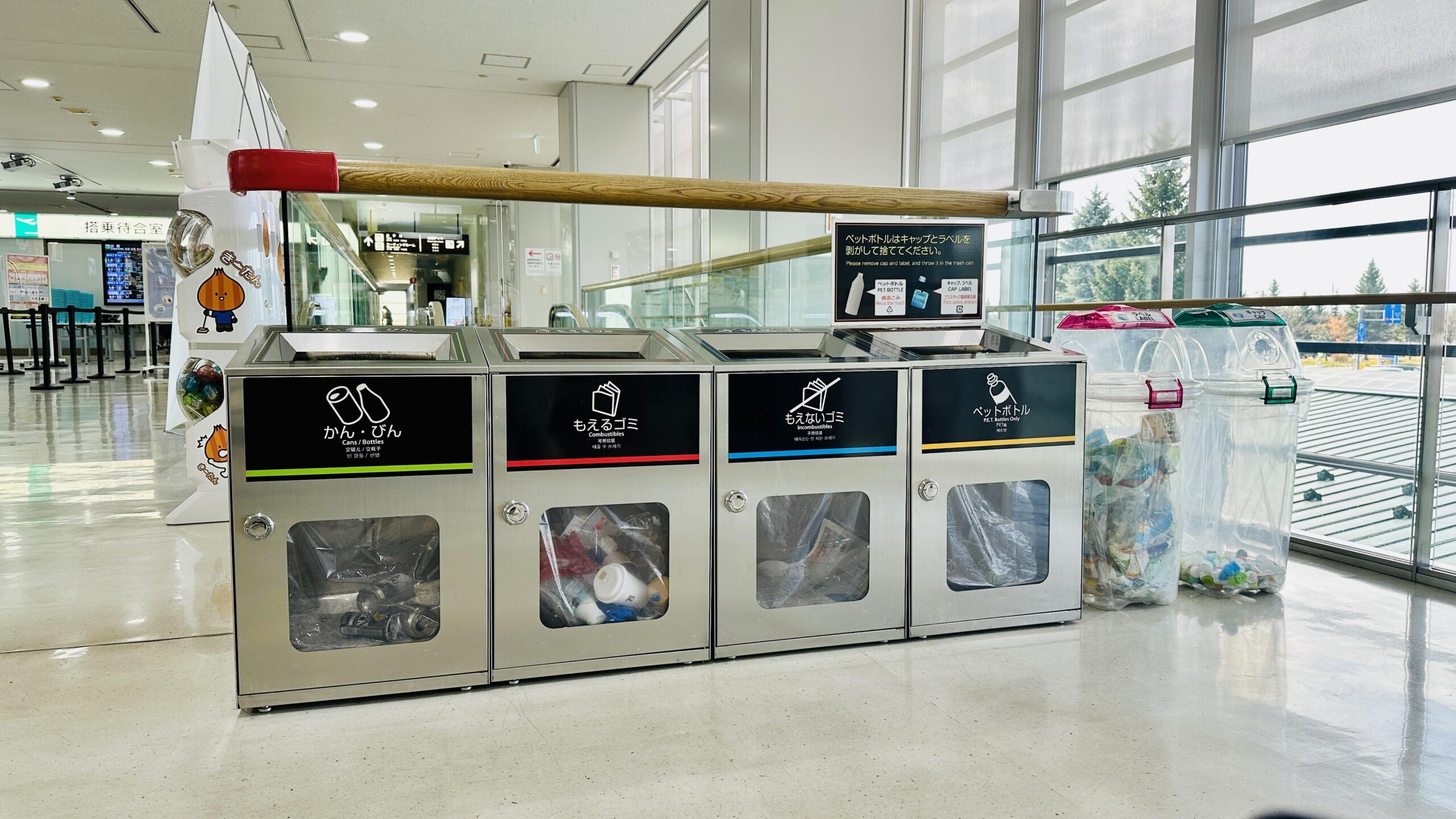
Indoor recycling and waste bins for different trash categories stand beside transparent containers for plastic bottle caps and labels in a bright public facility in Japan.
Final Advice for Students
It may seem complicated at first, but you’ll adjust quickly. Following the rules helps you integrate smoothly into daily life in Japan—and shows respect for your local community.
If you’re staying in a KCP dorm, follow the dorm’s disposal rules. If you’re living with a host family, follow the household’s local trash and recycling system. You can also learn more about KCP housing options and student life at KCP before you arrive.